

Picture this: a traveler named Alex has just landed at a busy international airport, eager to explore a new country. As Alex waits for luggage, there’s a plan forming—grabbing a local SIM card from the airport kiosk to stay connected. But just as Alex is about to commit, a colorful billboard catches the eye, advertising a data-only eSIM that’s a fraction of the cost of the traditional SIM with a phone number.

Now, Alex is weighing the options: Does it make sense to get a local phone number, or will a data-only eSIM do the trick?
As a travel eSIM reseller, you’ve likely encountered customers like Alex who are unsure of which option is right for them. Let’s break down the key points and help your customers make informed decisions.
Considering the Need for a Local Phone Number
Alex, like many travelers, may wonder if having a local phone number is necessary. There are certain scenarios where a local number comes in handy, and your customers may ask about these situations.
When a Local Phone Number Might Be Necessary:
- Local Services: Some services, such as ride-hailing apps or food delivery platforms, may require users to have a local number to receive confirmation texts or communicate with drivers.
- Business or Reservations: If Alex plans to make local hotel or restaurant reservations, having a local number might simplify communications with businesses that rely on traditional phone systems for confirming bookings or contacting guests.

3. Emergency Situations: For travelers who feel more secure with a local number, especially for urgent situations where local authorities or businesses might need to call them directly, having a phone number could provide peace of mind.
At this stage, Alex might be thinking that having a phone number is a safer option, especially when interacting with local businesses or services that don’t use VoIP apps.
The Hassles of Having a Local Phone Number
However, before Alex makes the final decision, it’s important to consider the downsides of having a local phone number. While it might seem convenient, obtaining and maintaining a local number isn’t always straightforward.
Potential Hassles of a Local Phone Number:
- KYC Verification: Depending on the country, Alex might be required to go through a time-consuming KYC (Know Your Customer) process, which could include sharing personal information for verification purposes. This process can feel invasive and adds an unnecessary layer of complexity.
- Maintaining Talk-Time or Packages: Having a local number often means managing talk-time balances or renewing packages. If Alex travels through multiple countries, this becomes even more frustrating as different networks and plans might be involved.
- Limited Functionality: In some cases, the phone number provided might not be truly local or may only work in specific regions. For example, a Thailand telco might offer an eSIM with a local phone number and data coverage across Southeast Asia, but the number would only be functional within Thailand. Once Alex crosses borders, the number effectively becomes useless—turning the eSIM into a data-only product anyway.
- Geographic Restrictions: Due to regulatory and licensing requirements, the availability of eSIMs with phone numbers is restricted in many countries. This means that even if Alex wants a local number in every destination, it may not be possible to get one in certain countries.
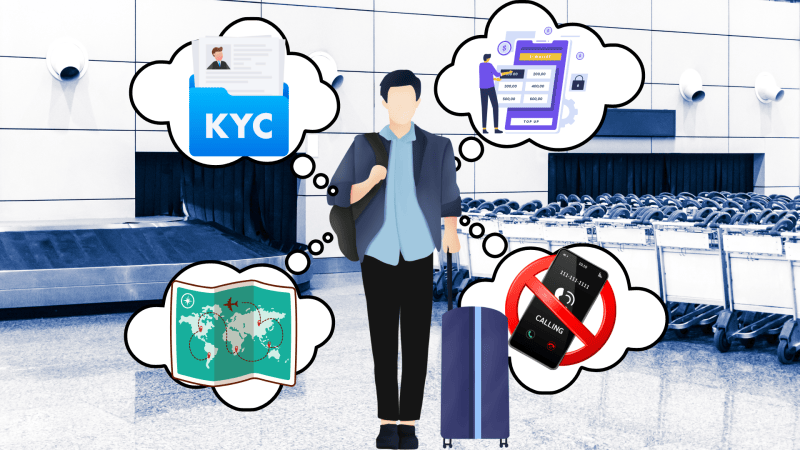
So, while having a local number might sound appealing, the reality is that Alex may face more hassles than benefits. Now the focus shifts to whether a data-only eSIM could provide everything needed for the trip without these complications.
The Benefits of Data-Only eSIMs
As Alex continues to consider the options, the ad for the data-only eSIM looks more attractive. The idea of hassle-free internet connectivity without worrying about KYC, talk-time balances, or expiring packages sounds much simpler. Let’s explore why a data-only eSIM might be the better choice for Alex and many other travelers.
Advantages of Data-Only eSIMs:
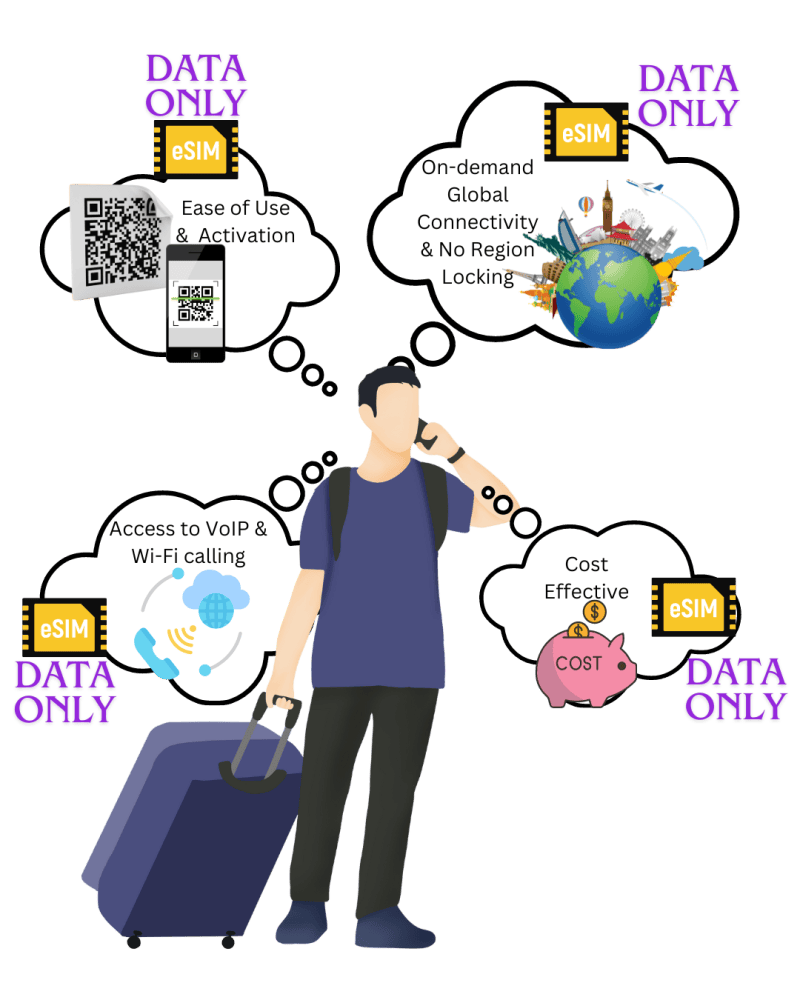
- Ease of Use: Data-only eSIMs are incredibly easy to activate and use. Once Alex scans the QR code or downloads the eSIM, they can be online instantly—no forms to fill out, no waiting for activation, and no need to manage a phone number.
- Global Connectivity: With a data-only eSIM, Alex can stay connected anywhere in the world. Apps like WhatsApp, Skype, FaceTime Audio, and WeChat provide seamless communication with family, friends, or business contacts via VoIP (Voice over Internet Protocol) calling and messaging. This eliminates the need for a traditional phone number in most cases.
- Wi-Fi Calling Support: Many mobile carriers now offer Wi-Fi calling, allowing Alex to make and receive calls over a Wi-Fi network using their regular phone number, even without cellular coverage. This feature further reduces the need for a local phone number, as Alex can still communicate via voice calls over Wi-Fi when available or even mobile data.
- Cost-Effectiveness: Data-only eSIMs tend to be more affordable than their counterparts with phone numbers. For example, the plan Alex is eyeing at the airport costs far less than the traditional SIM card with a phone number, making it a budget-friendly option for staying online during the trip.
- No Region Locking: Unlike phone-number-based eSIMs, which might only offer regional functionality, data-only eSIMs work across borders. Alex could travel from Thailand to Malaysia and continue using the same eSIM without worrying about geographic restrictions on the number.
| Learn more about all the calling options for Travelers here. |
At this point, Alex is leaning towards the data-only eSIM, especially given the freedom it offers to stay connected without the extra hurdles. But what if a local phone number is still required for certain services?
It’s important to note that the majority of eSIM providers, including eSIM Access, typically don’t recommend or offer eSIMs with phone numbers capable of receiving OTPs.
Virtual Phone Numbers: A Convenient Solution
If Alex encounters situations where a local phone number is necessary—such as booking a local ride-hailing service or making restaurant reservations—there’s a simple and cost-effective solution: virtual phone numbers.
Virtual phone numbers allow travelers to have a local number without the need for a physical SIM or the complications associated with maintaining one. Several apps and services offer this option, allowing travelers and users to meet the occasional need for a local number without compromising the benefits of a data-only eSIM.
Traveler-Friendly Virtual Phone Number Services:
Many providers have been offering these services for over a decade. Here are a few well-known ones.
- Skype: Offers virtual numbers in multiple countries for $7 to $18 per month. Alex can receive calls through the Skype app on their phone, making this a reliable and easy-to-use option.
- Google Voice: For U.S.-based travelers, Google Voice offers free virtual numbers with low international calling rates, making it a great option for those traveling abroad.
- Telos: Starting at $0.99 per week, Telos provides temporary virtual numbers in many countries, perfect for short-term travelers like Alex who might need a number for a few days or weeks.
- Sonetel: Offering numbers in over 60 countries at a cost of around $1.79 per month, Sonetel provides a cost-effective solution for those needing a local number in different regions.
The options don’t stop here. Many similar apps are available on both the Google Play Store and the App Store. You can quickly search for these providers and select the one that fits your needs. For convenience, click here to explore the search results on the Google Play Store, and if you’re looking for similar apps for iOS or macOS, use this search query on Google. Alternatively, you can also search directly on the App Store using appropriate keywords like “virtual numbers.”
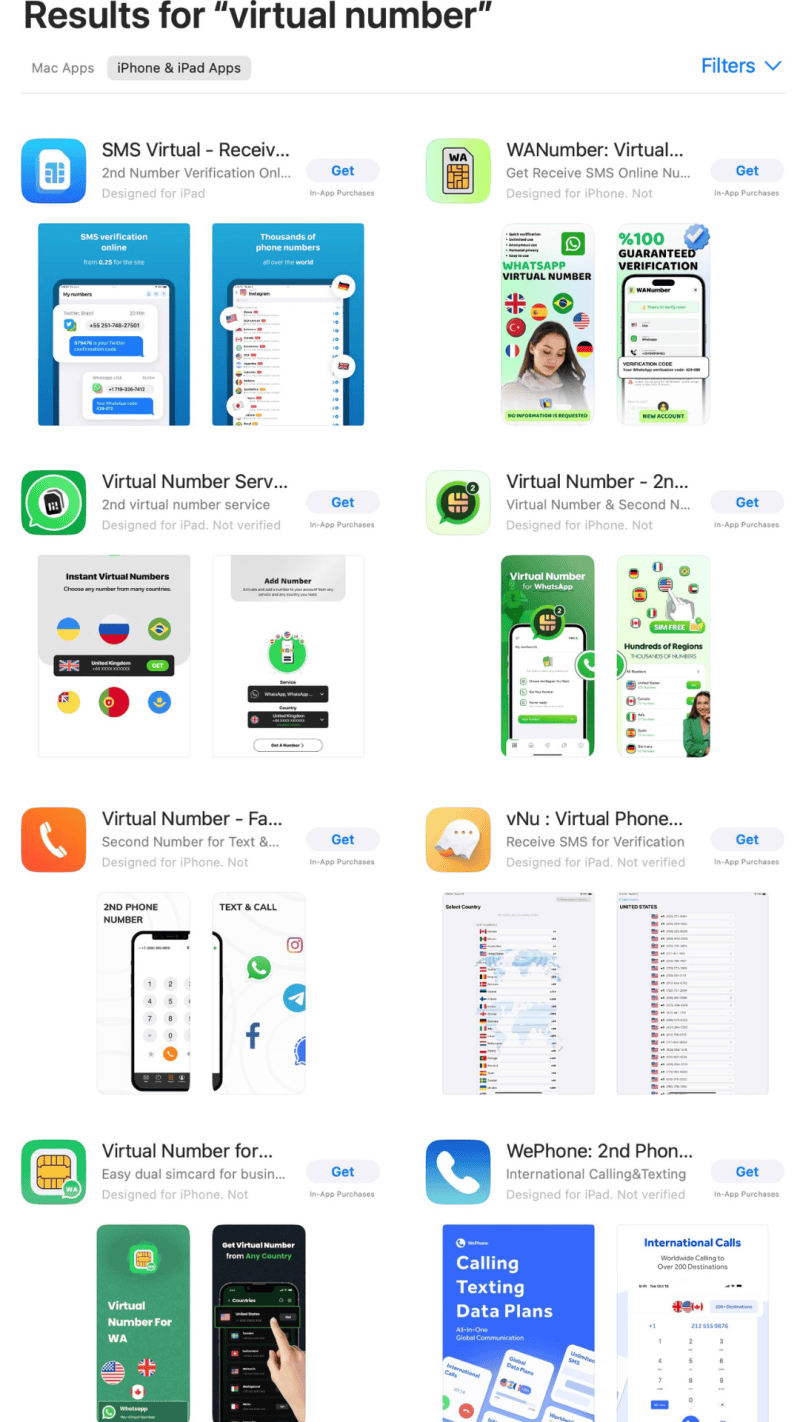

By using a virtual phone number, Alex can get the best of both worlds—a data-only eSIM for seamless internet access and a virtual number for local calls when needed, without the extra hassle of a physical SIM.
Conclusion: Helping Your Customers Make the Right Choice
As a travel eSIM reseller, your role is to guide customers like Alex through their decision-making process. For most travelers, a data-only eSIM offers all the connectivity they need without the complications of a local phone number. It’s easier to manage, more affordable and allows for flexible, borderless communication.
However, for those rare instances when a local phone number is necessary, virtual phone number services provide an excellent alternative. These services are easy to set up, cost-effective, and available in most countries your customers are likely to visit.
By presenting this balanced view, you can confidently answer your customers’ questions and help them choose the right solution for their travels. Whether they opt for a data-only eSIM or decide to complement it with a virtual number, they’ll be ready for a hassle-free, connected experience no matter where they go. To learn more you can get in touch with our experts at eSIM Access.


